







Live Dental Webinars
(Showing Next 5 Upcoming)
|
Precision Bonding for Indirect Restorations
Presenter: Dr. Devin McClintock
Sponsor: Bisco
| Tue |
3/31/26 |
7:00 PM ET
4:00 PM PT
|
| Tue |
3/31/26 |
11:00 PM UTC
|
|
CE Credits: 1 Interactive CEU
|
|
Bonding procedures for indirect restorations are among the most technique-sensitive steps in restorative dentistry, and often they are the key difference between predictable longevity and early failure. From ceramic veneers and onlays to full-coverage restorations and post-endodontic build-ups, understanding substrate management, adhesive selection, and proper material handling is critical for long-term success. This CE webinar will break down bonding protocols into clear, practical steps that can be immediately implemented in daily practice. With a special focus on adhesive practices and material selection, this course will explore decision-making for enamel vs. dentin bonding, selective etch protocols, dual-cure compatibility, post cementation considerations, and predictable core build-up techniques. Attendees will gain confidence in simplifying their armamentarium while elevating clinical outcomes through a consistent, evidence-based bonding workflow.
|
Evidence-Based Prevention: Implementing Caries Risk Assessment Protocols Into Your Practice
Presenter: Robyn Duke, DipDH
Sponsor: Solventum (formerly 3M Health Care)
| Wed |
4/1/26 |
7:00 PM ET
4:00 PM PT
|
| Wed |
4/1/26 |
11:00 PM UTC
|
|
CE Credits: 1 Interactive CEU
|
|
Current evidence shows that caries management is best done using an individualized risk assessment where detailed information about the specific risk factors of each patient can be used to establish the risk of developing future caries, and to create an effective treatment plan. This CE webinar will provide tips on implementing caries risk assessment protocols and offer evidence-based treatment options for your patients. Communication skills to help increase treatment acceptance will also be discussed.
|
GBT meets GPT: AI for Dental Hygiene
Presenter: Dr. Peter Fritz
Sponsor: EMS Dental
| Mon |
4/6/26 |
7:00 PM ET
4:00 PM PT
|
| Mon |
4/6/26 |
11:00 PM UTC
|
|
CE Credits: 1 Interactive CEU
|
|
This CE webinar introduces dental professionals to the fundamentals of artificial intelligence and its practical applications in patient care. Participants will explore how AI technologies are transforming diagnostics, documentation, and patient education in the dental operatory. Using a five-domain framework, the course examines how AI intersects with the full scope of dental practice: diagnostic, predictive, operational, professional/regulatory, and compassionate AI. Participants will discover how tools like GPT and GBT each deliver meaningful platform value and experience value, enhancing capability and quality across clinical workflows. Through real-world examples and practice-relevant case studies, this course will leave you informed, empowered, and ready to embrace the future of dental care.
|
Staying Alive: Bioactive Advances in Pulp Therapy
Presenter: Dr. Ryan Walsh
Sponsor: VOCO America
| Wed |
4/8/26 |
7:00 PM ET
4:00 PM PT
|
| Wed |
4/8/26 |
11:00 PM UTC
|
|
CE Credits: 1 Interactive CEU
|
|
Staying Alive: Bioactive Advances in Pulp Therapy highlights modern, evidence-based strategies for preserving pulp vitality. This CE webinar explores how bioactive materials support healing and regeneration of the dentin–pulp complex, with practical insight into indications, techniques, and material selection for vital pulp therapy. Designed for all clinicians, it connects science to everyday clinical decision-making.
|
Traditional vs. Custom Attachments: Improving Predictability in Clear Aligner Therapy
Presenter: Dr. Clayton Myers
Sponsor: Solventum (formerly 3M Health Care)
| Thu |
4/9/26 |
7:00 PM ET
4:00 PM PT
|
| Thu |
4/9/26 |
11:00 PM UTC
|
|
CE Credits: 1 Interactive CEU
|
|
Attachments play a critical role in aligner biomechanics, yet the method used to create and deliver attachments can significantly influence clinical efficiency, predictability, and esthetic outcomes. This CE webinar explores the differences between traditional attachment creation methods and custom attachment systems delivered via pre-fabricated trays. Participants will examine common challenges associated with conventional attachment workflows—such as technique sensitivity, variability in attachment shape, excess composite cleanup, and inconsistent engagement—and compare them with newer custom approaches designed to improve consistency and streamline clinical procedures. Practical considerations related to treatment planning, attachment placement, and bonding best practices will be discussed to help clinicians make informed decisions when selecting an attachment strategy for aligner therapy.
Featured On-Demand CE Webinars
Discover the differences between automatic and manual interproximal reduction. In the last 20 years there has been a major development in the use of clear aligners and functional concepts applied to orthodontic treatments, both on children and adult patients. A key element is interproximal enamel reduction, a fundamental practice to recover the interproximal space in order to facilitate teeth movement in orthodontic treatments and to insure clean and accurate procedures in Class II patients especially dealing in the posterior sectors. The main technology contributing, not only to obtaining excellent results, but to raise the level of care and protection towards patients is automatic IPR, helping clinicians to maintain excellent control, avoid over-reductions, avoid severe damages and excessive pressure applied to the patient during treatment; all factors that manual or obsolete techniques may cause.
Provisional restorations are a vital diagnostic and assessment tool. Function, color, shape, contour, occlusion, periodontal response, implant healing, and overall esthetics can be assessed with a well made provisional restoration. Accurate fit and margins are essential. Many clinicians make their provisionals utilizing bisacryl material and a pre-made stent. Lab made provisionals that are re-lined are also used. Printing your provisionals can save both time and money. Producing esthetic, well fitting, functional provisional restorations can be simply and efficiently done with your in-office 3D printer.
Difficulty swallowing (dysphagia) affects your quality of life and your overall health. The ability to safely swallow is vital for adequate nutrition and hydration, and it prevents foods and liquids from entering your lungs, where they can cause pneumonia. Depending on which part of the swallowing process is affected, dysphagia can be described as:
• Oral dysphagia — when the problem is in the mouth, usually due to the movement of the tongue
• Pharyngeal or oropharyngeal dysphagia — when the problem is regarding food passing through the throat
• Esophageal dysphagia — when food is unable to move down through the esophagus
Swallowing disorders can lead to tooth decay and other oral health issues if they cause food or liquid to remain in the mouth. This can increase the risk of cavities and other oral diseases.
Featured Podcast Episodes
Series: VOCO America
CE Credits: 0.5
Guest: Amanda Hill, RDH
|
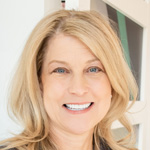
So how do we elevate our practice and what does elevating our practice do for our career, business and patients. It actually does quite a lot. For one, it helps with employee retention. A recent poll showed that the number one reason why a dental hygienist leaves a dental practice is because the practice is not innovative, it's doing the same ol same ol and they feel they are stuck in a rut, not learning anything new. nor are they trying new techniques and products. Also part of our episode today is talking about incorporating diagnostics into our practice. Instead of rushing through the medical history and moving right to our scaling, root planing and prophies, we should dedicate time to diagnostic testing, getting to the root cause of the problem. As our guest Amanda Hill will explain, diagnostic testing is a game-changer for the practice and not only builds trust between the practice and the patient, but also drives revenue to a whole new level.
Series: Bisco
CE Credits: 0.25
Guest: Dr. Todd Snyder
|
Many of us rely on ceramic materials for our indirect restorations. And with today's choices, we need to be aware of how we handle these materials before cementation. We also need to understand the differences between ceramic and zirconia and how we prepare these materials prior to cementation. To tell us all about it and share some invaluable clinical tips is our guest Dr. Todd Snyder. Dr Snyder is a popular speaker on Viva Learning.com, a cosmetic dentist, international author, lecturer and consultant to dental companies. He hosts a weekly podcast, Delusional: Winning the Weekly War of Dentistry. You can reach Dr. Snyder at: www.Legion.Dentist.
Series: VOCO America
CE Credits: 0.5
Guest: Dr. Dimple Desai
|
Crafting beautiful veneers isn’t just about technical skill—it’s about ensuring that every step of the process leads to a result that your patient will love. So, how do we achieve that? Stay tuned as we break down strategies and tips for mastering this process to give every patient a confident, beautiful smile they’ll love! Our guest is Dr. Dimple Desai, founder of Luminous Smiles of Newport Beach, a boutique dental practice dedicated to enhancing patients' smiles. As an Accredited Member of the American Academy of Cosmetic Dentistry, she belongs to a distinguished group of professionals worldwide. Her contributions to dentistry include publications in prestigious dental journals and international speaking engagements, leveraging her expertise to advance the field.