



| Dental Podcast Episode - The Dr. Phil Klein Dental Podcast | Listen on: |

|

|

|

|
and others. |
Episode 804: What You Believe Is What You Build: Breaking Free from Corporate Dentistry
 |
Is corporate dentistry holding you back from the practice you actually want to build — or is the real obstacle something happening in your own head?
Dr. Mark Kogut is a pediatric dentist, orthodontist, author, and educator with over 42 years of private practice experience. He built a thriving fee-for-service pediatric and orthodontic practice with more than 5,000 square feet, seven consultation rooms, and a team of 30, all while teaching orthodontics to pediatric dental residents for 22 years at what is now Texas A&M College of Dentistry. He is also the author of the Amazon bestseller Breaking Free: How to Escape Corporate Dentistry and Build Your Dream Practice. Dr. Kogut's depth of experience in both clinical care and practice leadership makes him one of the most compelling voices in independent dental practice today.
In this conversation, Dr. Kogut unpacks the mindset framework at the core of his book — including the Mobius Method, a model for understanding how beliefs, behaviors, and results are cyclically linked and not simply linear. He and Dr. Klein explore why fear is the single greatest barrier preventing dentists from making the leap to ownership, how a fee-for-service model can be built from scratch even in today's insurance-heavy environment, and what it actually takes to develop the leadership skills and team culture that sustain a thriving independent practice. The discussion draws directly from Dr. Kogut's four decades of real-world experience and his years mentoring residents toward thinking beyond clinical training.
Episode Highlights:
- The Mobius Method reframes the relationship between beliefs, behavior, and results as cyclical and multidirectional rather than linear. Recognizing that the results you get reinforce what you believe — and that your beliefs shape the results you pursue — is a foundational shift for any dentist considering the transition from associate to owner.
- Fear is identified as the single most significant obstacle preventing dentists from transitioning into ownership. Just as clinical skills like administering injections are learned through practice and repetition, business skills are also learnable — and many can be outsourced, reducing the threshold of knowledge required before making the leap.
- A gap analysis framework is presented as a practical tool for major practice decisions, including large equipment investments. The approach involves defining a clear target, honestly assessing the current state, identifying the gap between the two, and building a step-by-step plan to close it — applicable to financial planning, staffing, and practice growth.
- Structuring a practice as fee-for-service from the start is presented as both viable and preferable for dentists who want to deliver care on their own terms. In orthodontics specifically, full-fee collection before treatment begins was a consistent model in Dr. Kogut's practice, enabled by building trust with patients and families before financial conversations took place — and by equipping team members to have those conversations more effectively than the dentist alone.
- The wheelbarrow-versus-tractor metaphor captures the difference between a practice driven by poor systems that requires constant manual effort and one powered by well-trained, values-aligned team members who pull the practice forward. Hiring for growth mindset and cultural fit — rather than years of experience — and investing in team development through coaching, continuing education, and book clubs were central to sustaining that tractor model over four decades.
Perfect for: General dentists and specialists considering transitioning out of corporate or DSO environments, dental residents approaching the end of their training, and any practice owner looking to strengthen team culture, leadership skills, and the mindset foundations of independent practice.
If you have ever talked yourself out of ownership before you even started, this episode will show you exactly where that thinking comes from — and how to change it.
Disclaimer
Viva Learning LLC sites offer content that include opinions, techniques, recommendations, etc. from a variety of writers and speakers that are not necessarily endorsed by Viva Learning LLC, its associates and sponsored Viva Affiliates. Viewers are responsible for verifying the validity, accuracy and relevance of all content before implementing any techniques, products or recommendations into their clinical setting. Viewers understand that Viva Learning LLC, its associates, writers, speakers and sponsored Viva Affiliates are not in any way responsible or liable for any adverse events that may occur (i.e., in a clinical setting or anywhere) based on any information disseminated from Viva Learning LLC sites, including all Viva Learning sites.
The copyrights and other rights to the slides and video contained in a webinar posted on this website are owned by the speaker, Viva Learning LLC, and/or the sponsor company and/or its subsidiaries worldwide. Viewers are only authorized to view the content of the webinar (live and archive) at this Website and are not permitted to screen capture, record and/or download any content displayed in this webinar. You may not make any part of this Website available as part of another web site whether by hyperlink framing on the Internet or otherwise.
The copyrights and other rights to the audio contained in a Viva Podcast are owned by Viva Learning LLC. Viewers are authorized to listen to the content of the podcast and are permitted to download any podcast for personal use only. You may not, however, make any part of this Website available as part of another web site whether by hyperlink framing on the Internet or otherwise.
By signing up for a free webinar and/or podcast you give Viva Learning LLC and/or its Viva Learning Affiliates permission to send you emails alerting you to future CE opportunities and e-learning content.
California State Dental Board Provider Statement
Viva Learning is a registered continuing education provider in the state of CA. Dental Board of CA Provider #RP 5747. Approved through 6/30/2026
Questions regarding our Conditions of Usage, Privacy Policy, or other policy related material can be directed to our support staff by clicking on the "Support" link or you can email us at: support@vivalearning.com.
Approval does not imply acceptance by any regulatory authority or AGD endorsement.
Approval period: 11/1/2025 - 10/31/2029. AGD Provider # 217544
Presenter Information: Dr. Mark Kogut
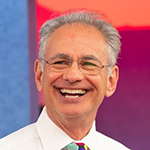 |
Dr. Mark Kogut spent over forty years practicing pediatric dentistry and orthodontics and taught orthodontics to pediatric residents. |
Viva Learning is an approved AGD PACE Provider and California State Dental Board Provider of dental continuing education. Viva Learning strives to deliver balanced, objective and clinically relevant information grounded on scientific research. Lecturers who are invited to deliver Viva CE webinars are advised to substantiate their claims with research-supported data and to disclose all commitments to, or relationships with, any commercial entity within the dental industry. In many cases, lecturers are sponsored by a dental manufacturing company, which provides them with support in the form of honorarium and/or dental products and equipment in order to help with clinical presentations. Prior to each live CE webinar, lecturers are made aware of the importance of delivering their presentations without commercial bias, and where appropriate, to mention a variety of different product choices that may be relevant to the subject matter of the lecture, for the educational benefit of the participant.
Transcript
Mark Kogut, a pediatric dentist, author, and educator who's on a mission to help dentists break
free from the grip of corporate dentistry and build practices rooted in purpose and belief.
Dr. Kogut is a strong believer in the power of ownership. He says corporate dentistry may work for
some, but in the long run, the career satisfaction that comes from owning and building the practice
of your dreams is a truly magnificent journey, one that allows you to shape your destiny and serve
your patients on your own terms. In our conversation, Dr. Kogut shares how your mindset and core
beliefs can be the driving force behind creating a practice that truly reflects who you are.
not just as a clinician, but as a leader. We talk about why beliefs often matter more than business
knowledge, the common limiting mindsets that hold dentists back, and what it really means to move
from being a wheelbarrow to a tractor in your practice. So if you've ever felt stuck,
uninspired, or unsure of your next step, this episode will help you see how a single mindset shift
can completely transform your future in dentistry. Before we get started,
I'd like to thank all of you for tuning in. If you're enjoying the show, please follow us on Apple
Podcasts and Spotify, and even better, leave a review. By doing so, you're not only showing support
for what we do here, but your reviews are instrumental in getting more dental professionals to
listen and benefit from our content. We really do appreciate it. Dr. Kogut, thanks for joining our
show. Thank you for inviting me. I'm happy to be here. Yeah, so again, we've talked offline about
this. I love the... title of your book, Breaking Free, How to Escape Corporate Dentistry and Build
Your Dream Practice. And you've certainly done that, being in practice for 42 years, running a
practice that has seven consultation rooms, 30 people working there, over 5,000 square feet.
And then, of course, you taught the residency program at the time, which was Baylor. Now it's part
of Texas A&M, you mentioned. You taught them ortho for 22 years. So, so much experience and so
much stuff to share with us. This particular episode, we're going to be talking about ownership,
owning your own practice, and as your title states, kind of escaping corporate dentistry. Now you
talk about the Mobius method in your book. How does it apply? What is it, first of all?
Tell us what it is. And also, how does it apply to dentists transitioning into ownership? Well,
a Mobius is a geometric figure. that is described as a one-sided figure.
If you were to take a pen or a pencil on a Mobius and draw a line down the middle of it,
as you continue around the Mobius, you'll end up where you started. And so that came about because
I believe, and what I'm using it for is to describe some things that I believe in terms of how we
go about making changes or making decisions. And that is what you believe.
has an impact on how you behave. And how you behave has an impact on the results that you get for
anything that you're trying to do. And this is not just a one directional process.
Let's say you have a result of something. Well, that had an effect on what you believed.
You had this result. I believe if I do this, I'll get the same result again. It's more than one
direction. You could say it's bidirectional or even multidirectional, depending on the starting
point that you use. That's certainly very interesting. How does that apply to dental ownership?
Let's say you're an associate in a corporate or private practice. If you believe that you cannot
leave, you'll stay. But if you don't like exactly how things are going there,
if you believe that you want to get away from that, If you keep that belief,
I believe it can be facilitated and you can make that change. So what you're saying is mindset is
very much a factor here in transitioning into ownership, right? If you don't have the right
mindset, and many people have said it in the past that most of the limitations that people,
individuals experience are self-imposed, right? They tell themselves or they rationalize to
themselves in a way. where they just say, you know, there's so many things that can go wrong.
These are all the risks. You can talk yourself out of anything. But having that belief and having
that mindset, you know, as long as there's something behind it, it's good to dream,
but you also have to have something behind it. It has to be feasible. Then making that transition
is the right thing to do in many of these cases, right? Yes, I believe it is. And I wish I could
give attribution to this quote that may not be exact. But I heard once that someone said,
whether you believe you can or believe you can't, you're right. So I believe mindset is very
important. And I do believe that if you believe something strong enough,
in many cases, you can make that happen. And let me just say as an aside on that,
this is something I used to tell the residents that I taught. I said, You didn't get to where you
are into this residency program by being someone who's not capable. You're very capable.
You had to go through college. You had to go through dental school. And now you're in this program.
So you're a very powerful person. I hope you will always believe that.
And you can do things. If you put your mind to it, I believe you can make things happen.
And this is an example. If you're now in corporate or private practice as an associate,
which is not a bad thing, but if at some point you believe it could be better, I believe you can
make that escape, and especially if you have some help doing it. So I agree with you 100%,
Dr. Kogut. I think anybody who's in a pediatric residency program or any other kind of residency
program, these people are very capable. They've proved themselves over the years to excel and do
well, and they competitively were accepted into these programs. And they're very capable people.
But when they get out in the real world, if they start in a corporate environment and then they
decide they would prefer to break away and be free of the encumbrances of corporate dentistry,
some of them do it and they do it very successfully like yourself. But then there's some that are
afraid. They don't have the confidence. They don't have the entrepreneurial mindset. They don't
believe in themselves when it comes to business skills. And that fear that overcomes them keeps
them back. and keeps them from making that leap. What do you say to those dentists? Well,
I think you said a mouthful when you use the word afraid. I do believe fear is the biggest limiting
factor in people making this change. And what I would say about that is,
think about the first time when you were told, okay, you need to give up. injection.
You didn't know how to do that. You know, you practice it and you learned it. And business skills
are learnable. And you don't necessarily have to know everything about those skills because you can
outsource some of that too. But it does help to have at least a basic,
you know, background, you might say, in some of the things so that you know what to look for.
But I have to say, I don't know that the business aspect is the most important. I think what you
believe is the most important thing. Right. Now give us an example of that. I mean, the bottom line
is you do have business decisions to make. Do I buy or lease? How many people do I need to hire?
I have a sales rep here trying to sell me a CBCT, but my cash flow is obviously very limited
because it's a new office. You know, there's business decisions that have to be made.
So give us an example of how beliefs matter. and they supersede or transcend business knowledge.
Well, I think this relates to, you know, what are you trying to accomplish?
Do you believe that you want to treat patients in a certain fashion? Do you believe that you want
to have a team that believes that you do? And when you have that,
you have a target, you have a goal. What you'd like to do actually is turn that into an objective
to see if you actually get there. The thing that I would say is when I'm trying to make changes,
especially significant ones that may include a change in behavior or a change in financial
situations, what I like to do is look at what is my target and then consider where am I now?
And that leads you to an opportunity to do what we call a gap analysis. What's the difference
between where we are and where we want to go? create a plan in order to to take the steps that you
need to go through we've all heard this the state saying how do you eat an elephant one bite at a
time so let's say you have someone trying to say a cbct and right now you can't justify buying it
because there's no roi yet well you can figure out a plan on how to do this over time so i think
most everything can be overcome by looking at different options So I think that's the way that you
do that. Create where you want to go. Look at where you are. Consider the gap. Figure out how to
close the gap. We'll be getting right back to our guest in a second. But first... it comes to
digital workflow equipment, it's important to partner with companies that provide premium products
with unparalleled service, all at an affordable price. That's why you should check out Shining 3D
Dental, a company that offers a complete and integrated suite of high-quality and easy-to-use
digital dental equipment. Their local offices are based in California and Florida, so you get in
-time comprehensive support. In fact, Shining3D Dental can furnish your office with an entire suite
of digital equipment for under $27,000. This includes their AoralScan3 wireless intraoral scanner,
Metasmile 3D facial scanner, and the AccuFab 3D printer with its post-processing equipment.
Plus, the Shining 3D Dental digital workflow solution includes cloud storage, synchronization,
and software for consultation, analysis, and design. So whether you're taking your first step into
digital dentistry or you're looking to add additional equipment, check out Shining 3D Dental's
complete digital dental portfolio. To learn more, visit shining3ddental.com.
You know, we've talked about this quite a bit offline, Dr. Kogan, and I'd like you to share your
thoughts on this with our listeners. You know, one of the reasons why a dentist makes the leap to
start their own practice is because they really want to practice dentistry and offer the patient
the services that suits them best. And in large part for that group of dentists that's making that
leap, they want to do spectacular dentistry. And based on third-party reimbursement,
it barely covers the lab costs on some of the stuff that we want to do. So talk to us about how a
dentist should communicate this with the patient. And how you did it, because I know you extricated
yourself from third party payments as far as your practice. And talk to us how, despite the fact
that it's a little scary dropping off these insurance plans, in most cases, it's the best thing to
do. Yes. Yeah. We were always private fee for service.
I will say that we nevertheless had to work with insurance companies.
My belief is if the patient has insurance. Either they are or someone else is paying for that,
and I believe they deserve to get their benefits. But I believe that's a relationship they have
with either their employer or directly with their insurance company and not with me. So our
expectation, and they knew this from the very beginning in our conversations, is we expected
payment at the time of treatment, and we would file immediately so that you would get your
reimbursement. I could go on. I have some issues with insurance companies and how they deal with
reimbursement, but we would fight for the patient because they deserve to get. Right. But
realistically, Dr. Kogut, the dentists that we're talking about, they're going to make this leap
and start their own practice and escape corporate dentistry. Can they do that by accepting
insurance plans at this point in time? Are we at the stage of dentistry now where we have to really
consider not participating in third-party insurance companies? in order to,
for those of us who want to practice a certain kind of dentistry and deliver a certain kind of care
to our patients, and we could still make it. We could still be successful, even if we started from
scratch and we don't get on a list and we're not being called by patients that have particular
insurance companies. We literally do it the old-fashioned way, which is fee-for-service. You
think that's totally doable? Yeah, I totally believe that could be done. And now, one thing about
pediatric dentists. dentistry that's different than other forms of practice is one,
we don't have big cases. So the dollar numbers are different. Okay.
But orthodontics is a different animal. And I would say in most of our cases,
when I was practicing for 25 years of my practice doing orthodontics, most of the time patients
would pay up front for the entire fee before we even started. So a lot of that has to do with
developing a trusting relationship. And by the way, the dentist is sometimes not the best one to
have that conversation. And so this is one reason why I think it's so important to develop a team
that understands the why of the business. You know, why are we here? Why do we want to serve you?
And how are we going to serve you? Do you understand? the values? Do you understand the mission?
Do you understand the vision of this practice? And team members can say things about the dentist
that you would be considered either a narcissist or worse if you were to say the same things about
yourself. Yeah, that's totally true. So let me ask you this. You use the metaphor wheelbarrow
versus tractor in your book. What does that mean in terms of leadership and culture? What I'm
trying to express with that is what happens when you have good people and when you have good
systems. If you have good systems and if you have a good core base of values,
mission, and vision, and you've hired people for that, you're working as a group together.
If their systems are bad and you're having to make it up every time you do it, it's like having a
wheelbarrow. You're having to push this load around. You know. And it's a lot of hard work and you
don't get very far very fast. But if you have good systems with good people who are trained well
and know what they're doing and know why they're doing it, it's like having a tractor.
Tractors pull you forward, okay? It's doing the work. You're just the one in the driver's seat
directing where it's going. And that's a totally different thing. So, and again,
one of the things that was really important to me is how do I feel at the end of the day? How does
my team feel at the end of the day? How do the patients feel at the end of their appointment?
So the schedule was a big part of how trying to convert from a tractor.
I mean, excuse me, from a wheelbarrow to a tractor. So that was one of the reasons we worked on
that. routinely in our team meetings. Now, when you bring a team member on to the existing team,
you add somebody, somebody had to leave or for whatever reason, how do you determine that they're
aligned with you on the value side? Do you sit in that interview with your,
well, I know you retired now, but did you sit in that interview? or at least maybe if you
interviewed that person two or three times, maybe you were on the last one. How did you make sure
that that person was exactly the kind of person that may not necessarily, they have the same
values, but they may not understand a lot of things, but they're certainly teachable because
they're open to learning and they're looking forward to working in a practice that shares your
values? Well, what you just said about the person at the end of your statement there is really
important, really important. Because we're looking for those characteristics. Our process was not
fast, okay? And I mean, we could have a whole discussion about how to go through the hiring
process. But again, it's starting with where is that person?
And I believe the person I'm looking for most of the time is working and is not happy there.
So they're looking for a new home. And you have to create that home that they want to be.
in, that family that they want to be in. And that, by the way, that's how I looked at my team.
We did stuff together. We celebrated together. We took care of patients together too,
by the way. And that was how we earned a living.
So I think that it's beyond this discussion about hiring is probably beyond the time for this
podcast. Right. But were you present during the interview? I'm going to say most of the time,
no. And I will say the initial interview was a series of four questions that a high school student
could ask the person. And they determined from that whether we even wanted to meet them. It was
very specific. There was a script of questions and they just had to listen to that and see,
yeah, this person answered those questions. You guys should meet this person. If you're listening
to this podcast, chances are you're always looking for ways to take your restorative and aesthetic
dentistry to the next level. And it really all starts with great dental photography. And the right
camera can be the difference between getting the photos you need and actually using them to boost
case acceptance. That's why so many practices choose the iSpecial digital dental camera from Shofu.
It's designed specifically for dentistry, making clinical photography fast, easy,
and incredibly consistent. So there's no guesswork and no frustration for your team. With high-res
images, simple one-touch operation, a lightweight design, and a large touchscreen you can use even
with gloves on, the iSpecial fits seamlessly into your workflow. And those clear, compelling before
and after photos? They make treatment conversations easier and help patients say yes.
Bottom line, this is a camera that pays for itself in no time. So check out the iSpecial digital
camera from Shofu. You'll be glad you did. Visit Shofu.com and use the code VIVA for a special
offer. And then that would be the end of step one. Step two, you know,
we begin to get to know them more and more. Well, like I said, that really could be a whole
podcast. Right, right. But I think it's important because you talk about on even the podcast
episodes we've done together, Dr. Kogut, how important that team member is. Because in that
corporate experience where you first knew that you had to escape that environment, that example
that you gave where that team member was hired without even having a discussion about whether they
even like kids or not. It's a very important part of maintaining the culture because you can't do
it alone. You had 30 people on your staff, so you obviously had to make sure that you had a unified
cause going on where people were on the same page and your team members were all fighting for the
same thing as far as the culture that you wanted to portray to your patients and the services that
you wanted to provide those patients. Let me just comment about that, Phil.
Yeah.
disturb me so much. In a sense, what you could say is the owner of the practice imposed upon the
rest of the people this new person without knowing her, okay? I believe the team is one of the most
important aspects of having success in bringing someone in. If the team doesn't like that person,
they are going to fail sooner or later and probably sooner. All right.
So the team has to understand what we're hiring for so they can know who we're hiring for.
And as an example, you know, when the team would lose a person, maybe they moved,
maybe their husband moved or whatever, you know, they would say, we need to replace this person
right away. And they would say, we need someone. This is an important job. We need someone with
five years of experience. As an example, you hear this all the time. And I said, look. if they
worked in one office they have one year of experience five times you know what you're looking for
is someone who is looking to grow and learn and maybe they bring some things and we learn from them
but maybe they do it in a way we don't like and they have to adapt to our systems so integrating a
new team member is a whole process i can talk about that yeah that's a whole process right and so
I'm taking notes on this because I got you down for another couple of episodes. Yeah. So, yeah,
no, but listen, that, you know, we're talking about that because we're talking about leadership and
leadership, you know, it starts at the top, but then you're not going to run this whole thing
yourself. You need a team. This is the key to your success. These people that are out there working
every day coming in, they need to believe in the same thing you believe in. And like you said, they
keep you going straight on course because you drifted once and your hygienist said to you, Dr.
Kogut, whatever they told you, they set you straight. So it's an amazing situation when you have
these people in the same office together. It's like a well-oiled machine and everybody actually
enjoys going to work. Leadership is very important, and I do believe there are certain things that
the owner of the practice can never delegate. As an example, if the team wants different core
values and they're not congruent with yours, that's a non-starter. It's the mission,
same thing, and same thing with the vision. So these are all really important facts. But leadership
is not just for the dentist owner. It's for the team. They have to lead the patients to better
health. And by the way, many of them have families. Are they leading their team in a way that
they're happy with? What about their community outside of the office, outside of the practice and
outside of their family? Are they using those leadership skills? in those arenas as well.
And so, yes, in our practice, we spent, well, we had a book club and I would find books that we
would read together and discuss and learn together. We would go to continuing education. We would
have coaches for the team. All of these were things that I believe contributed to their leadership
development and mine as well. All the time that you dedicated towards CE events with your staff,
bringing coaches in. You probably had an ergonomic assessment at one time or another where somebody
came in and assessed your practice and helped how the team members, their posture and gave
recommendations. All of this stuff is so important in maintaining a good relationship with the team
members and giving them the confidence that they're working in a place where they're actually cared
for and they're not looked at. as something that the corporate dentistry office you worked in
looked at the staff as, which was more of a utility service or whatever,
where they would interchange them from one operatory to another. And it didn't matter who the
dentist was doing the procedure. They would just get another assistant to go in there. But you
don't look at it that way. It's a completely different environment in the practice that you
started. I totally resonate with what you just said. You know, people are important.
You want to be around people, or at least I wanted to be around people that had a growth mindset,
that wanted to be the best they could be and in service to something else that's greater than them.
So I believe that the values, the mission and the vision served as part of that.
Another part of it was, hey, we're working with kids and we can have a big influence on their life.
And one of the things that I've said to many people is I know of no other person who spends as much
time with a child watching them grow other than a pediatric dentist that's outside of the family.
I mean, a teacher has a pretty intense time for maybe one year, but we see them from the time they
start in our practice at a very young age until they graduate from our practice. So I think we're
in a really unique position. And because of that, I think we should be about a lot more than just
teeth. And we were, and we had lots of programs that didn't involve any,
didn't have anything to do with teeth. You mentioned that teachers are involved with kids almost as
much as the parents are in the beginning. But in the case of a pediatric dentist, they're involved
with the patient, but on a much more difficult scale than a teacher. right? Because you're actually
treating them and doing something on them that they are not typically happy about going to the
dentist and could be very difficult to manage where you overcome all those fears.
And there's a complete relationship that you build with that young kid that is really special that
needs to be recognized. Well, I may disagree with you a little bit in terms of difficulty.
I think if you have a... a trusting relationship from the beginning. You know,
I like to say, and I felt like most of the time I could help a child get through any type of visit
and feel good about it afterwards. There were certainly times when that wasn't the case and it was
difficult. And of course, having the parent back in that area helped them to understand that maybe
your child's not ready to accept this treatment. And if it's something that we can buy some time
with, we'll put it off. And we'll have you come back and try to develop more of a relationship.
And if it was something that was an acute problem, we could talk about, okay, we might need to
sedate your child for this procedure. And they understand that now. But I think most kids,
frankly, for me, were easier to treat than working with adults.
That's a big reason why you love pediatric dentistry. I want to ask you about leadership a
question. There are some... that say i'm not a natural leader i never was uh i'm an introvert i
don't like really to manage other people but i did want to start my own practice so i they went
ahead and started their own practice and they delegate almost everything possible to their office
manager and they are very focused on being popular in the office so they don't put their foot down
they're very mild mannered they don't really want to be the enforcer in the office and they don't
want to call out people when they're not doing what they're supposed to do because they want to be
popular. What do you say to that as far as that kind of mindset where they don't look at themselves
as a leader and they just delegate it out to the office manager? Well, I have definitely
experienced that. I've seen that where I was as an associate. There was an enforcer practice
manager. I didn't like that. You know, I guess you can get away with that.
It's a different way of working. But I would say it probably has a lot to do with their mindset in
the sense of they don't feel like they're a leader and they're not willing to take the time to
learn how to become a better leader. Leadership is a skill and there are so many opportunities to
learn. You know, I mean, you could read books, you could take courses, you could get a mentor.
The leader that I am today is not the leader that I started, that I was when I started.
And I love it. I love it. I feel like if I am leading, I feel like I can help people to be more
than they thought they could be. And maybe that's an aspect of leadership that you would call
coaching. There are a number of different styles of leadership. That was something I believe it
was. Goldman talked about the six different styles of leadership, and each one has its place.
I think one of the things, and it may have come from his book or it may have come from one of my
teachers, is that these different styles of leadership are kind of like golf clubs. You don't putt
around the whole course, nor do you use a driver on the putting surface. You have to know when to
use them. And each of them has a place. Yeah. Did you consider yourself a natural leader when you
made that move from corporate dentistry and started your own dream practice? I'm going to say I
don't believe so. I started a study club 27 years ago to study leadership.
And we did a leadership practices inventory in the very beginning.
I didn't score so well, but I was determined that I would get better. So yeah,
it is a skill that's learnable. Yeah. Now, and I think that's amazing that you keep emphasizing
continuing education, reading books, taking, finding a mentor, whatever you need to do,
go to study clubs and talk to other colleagues that have done this already. And just keep absorbing
and learning. Because if you do that, it will affect your mindset in a positive way.
It'll allow you to shift just enough to take the leap. And then you can continue to develop your
skill sets as you move forward. And that's what life is all about. That's what makes life
interesting and makes life satisfying. Otherwise, you're stuck in a rut if you're always dreaming
about something and you're doing the same old thing. I do want to ask you one question before we
wrap it up. And that is... You taught residents for 22 years, and that was while you were
practicing. How did teaching residents change your perspective on delivering care and also running
your practice? Well, what I typically saw was a huge focus on the clinical procedures.
That was really what the program was all about. I have a bias.
I believe in private fee-for-service dentistry. I believe in taking care of patients,
of having a team and not just a, quote, staff. And so a lot of the things that I would talk to them
about that you might say are, quote, off-label because they weren't directly clinically related
was about private practice and reminding them.
that you're a powerful person. You wouldn't have gotten to where you are without going through all
these steps. And if you did that, I believe you can own your own practice.
You can have your dream practice. It's just a matter of the mindset to have that.
And in the beginning, I usually have told him, I said, I think it's great to go work for someone
else for a while. You'll learn what you like. You'll learn what you don't like. And that will help
you when you're ready to go and have your own practice. And the other thing is you'll make some
money without having to go into debt right away. You probably already have a lot of debt just
getting through college and dental school. So I usually say I would consider going out there for
five to seven years. You'll still have lots of time to have your own private practice.
And from the very beginning, Wherever you're working, start learning leadership skills,
learning a little business skills. Ask a lot of questions in the practice that you're in and take
whatever you can as information to learn. And again, incorporate those things you like and reject
those things that you don't like. Start taking notes, you might say, in the very beginning.
It's still part of your education is the way I look at it. Yeah, it's great advice. And when the
DSOs, the dental service organizations became, when they emerged and they picked up momentum,
many of the pundits in the dental industry said, yeah, 90% of private practice is going to be in a
DSO. And I think it kind of hit a level where dentists are starting to... think the way you're
speaking right now, Dr. Kogut, is that the real satisfaction that could be gleaned from dentistry
is when you own your own practice. And I think that's the truth for a lot of dentists. I think
we're kind of entrepreneurs. Years ago, there was no such thing as a corporate dental office.
And we all had our own place and we all worked on our own careers. And I know it was somewhat
siloed. Some of us had group practices. It was a little bit lonely for some of us. The way things
are going now, I think a lot of dentists are thinking about making that move. They're spending
their time in their DSO for a few years, getting some practice, learning a little bit of clinical
dentistry, and then they're moving on or at least moving into an associateship and then possibly
with the option of owning their own practice. And I think you've been an amazing example of how
much career satisfaction and love for the profession that can be developed when you actually own it
yourself. Well, I totally agree with that. I mean, I believe that I could have chosen any career.
And dentistry was not on the front of my mind. You know, I think I mentioned on another podcast,
I really was thinking about architecture. But I ended up taking a psychology class, working with
kids. And I was thinking, how do I combine architecture with kids? And when you think about it,
dentistry is intraoral architecture. So I got to do my favorite things all day,
every day for 42 years. I wouldn't have changed a thing. And if I had to do it all over,
there's no question I would do it just the same way. So I think dentistry is a great career.
I think there's room for a lot of satisfaction in your life. You can do a lot of good for the
patients and your community. We did stuff outside the community too.
Like I said, I loved it. I loved it. And I want other people who have gotten to the point where
they are capable of owning their own practice and they're not happy where they are,
then take the leap. Go out there and do your own thing. And if you need some help,
there are plenty of people out there that can help you. And certainly I would be one of them that
would love to have an opportunity to help anybody. that wants to make that leap. Yeah. What's your
email, Dr. Kogut? So if somebody wants to send you an email to check in with you. It's markkogut at
gmail.com. They can reach me there. Kogut is spelled K-O-G-U-T.
So it's markkogut, no space, no dot, at gmail.com. And check out his book.
It was a bestseller on Amazon for a while. It's available on Kindle now. Breaking Free,
How to Escape Corporate Dentistry and Build Your Dream Practice. It's an amazing story, Dr. Kogut.
You're still passionate about the profession. You are on a podcast now in front of tens of
thousands of people that listen to the show. We're very, very happy to have you on the show. And we
look forward to doing more programs in the future. Thank you very much. And Phil, I'm grateful for
the opportunity to be here with you. Thank you so much for inviting me to take part in this. You
bet.
 Episode 804. What You Believe Is What You Build: Breaking Free from Corporate Dentistry
9/17/2026 - CE Credits: 0.5 CEU (Take Exam)
Episode 802. Scaling Up: The New Era of Dental Hygiene with Katrina Klein
9/10/2026 - CE Credits: 0.5 CEU (Take Exam)
Episode 800. Dropping Insurance? Buying a Practice? Your Marketing Matters More Than Ever
9/3/2026 - CE Credits: 0.5 CEU (Take Exam)
Episode 798. From GP to Perio Practice: Expanding Your Role as a Dental Hygienist
8/27/2026 - CE Credits: 0.5 CEU (Take Exam)
Episode 796. Why Dental Implant Disease Moves Faster—and What You Can Do About It
8/20/2026 - CE Credits: 0.5 CEU (Take Exam)