




| Dental Podcast Episode - The Dr. Phil Klein Dental Podcast | Listen on: |

|

|

|

|
and others. |
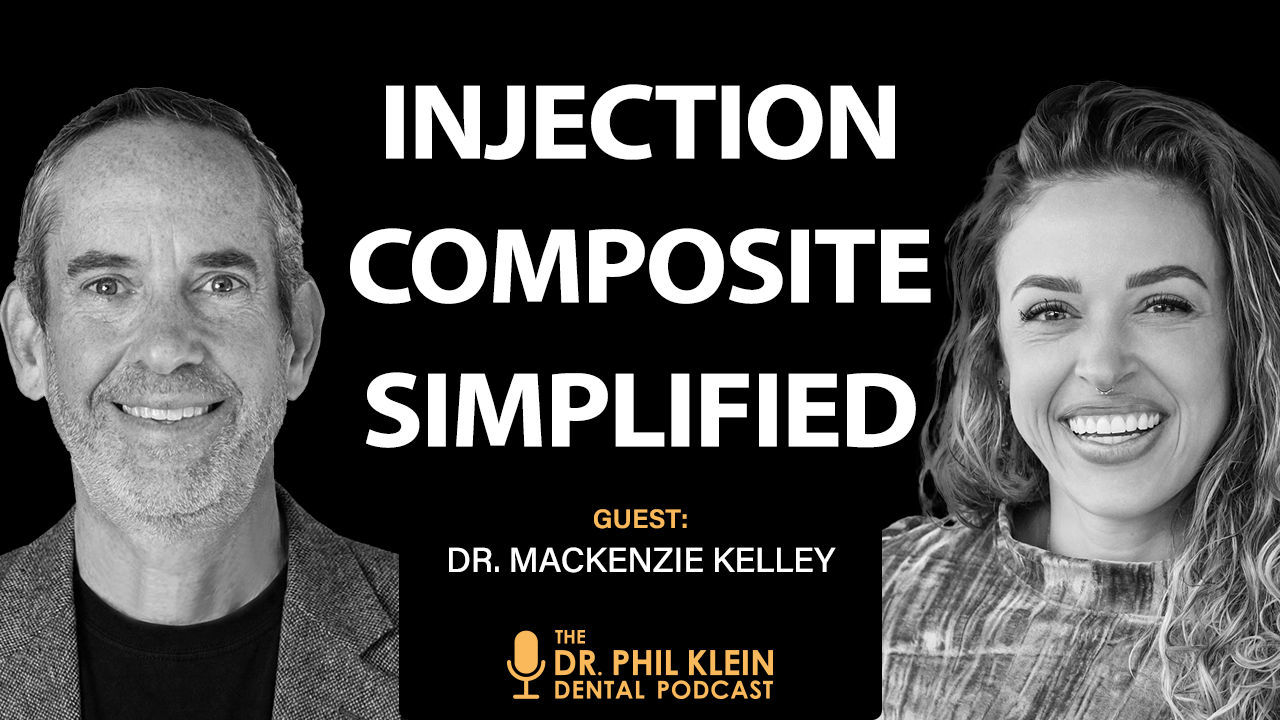
Episode 807: Master the Social 6 with Injection Composite
 |
What if you could deliver stunning anterior composite restorations in half the time it takes to freehand sculpt them — without relying on advanced artistic ability? This episode breaks down exactly how to do it.
Dr. Mackenzie Kelly is a cosmetic dentist, educator, and adjunct faculty member at Indiana University School of Dentistry, where she graduated with highest distinction and received the American College of Prosthodontists award for excellence in crowns, bridges, restorative, and cosmetic procedures. She is currently pursuing accreditation through the American Academy of Cosmetic Dentistry — one of the most prestigious and rarely achieved designations in the field. With hundreds of hours of continuing education in minimal prep veneers, cosmetic bonding, clear aligners, and digital dentistry, Dr. Kelly brings both technical mastery and genuine artistic talent to every case.
In this episode, Dr. Kelly provides a thorough clinical walkthrough of the injection composite technique — a digital workflow that uses a clear custom matrix fabricated from a diagnostic wax-up to guide composite placement and eliminate the need for freehand sculpting. She explains why this approach is applicable across nearly all anterior composite scenarios, how it compares to indirect porcelain restorations, and how proper case planning on the front end is the single most important factor in achieving consistent, beautiful outcomes. The conversation covers the full process from digital scan and CAD design through matrix fabrication, tooth preparation, isolation, injection protocol, and final finishing — with specific clinical tips at every step.
Episode Highlights:
- The injection composite technique uses a clear matrix fabricated from a digital or analog diagnostic wax-up, with small injection ports pierced into the matrix through which composite is injected once the matrix is fully seated. Creating two separate matrix variants — one for every other tooth and one for all teeth — dramatically reduces interproximal cleanup and improves contour control, especially in multi-tooth cases like the social six.
- Tooth preparation for injection composite is performed entirely within enamel when possible, using air abrasion rather than a handpiece to achieve micro-surface preparation without structural reduction. After isolation with Teflon tape on alternating teeth, unprepped enamel is phosphoric acid etched for 30 to 60 seconds, followed by application of a universal self-etching bonding agent to ensure reliable adhesion even if small areas of dentin are inadvertently exposed.
- A high-filler-content composite — specifically one with approximately 91% filler loading in the packable formulation and approximately 81% in the flowable formulation — provides significantly greater strength and stain resistance compared to conventional composites, which typically contain filler content in the 60 to 70 percent range for flowables. Higher filler content reduces the resin component responsible for polymerization shrinkage and staining, supporting long-term durability of direct anterior restorations.
- A partial cure of approximately 10 seconds before removing the clear matrix allows the composite to reach sufficient rigidity for matrix removal while remaining manageable for flash cleanup. A sharp scalpel blade is used immediately after matrix removal to trim excess composite at the gingival and interproximal margins before completing the final cure — this technique minimizes finishing time and reduces the risk of over-contouring.
- Executing a provisional mock-up using a putty matrix and a bisacryl provisional material before any etching or preparation allows the clinician to verify tooth length, proportion, and shade masking in the patient's face under natural conditions. This critical step also helps identify whether darker underlying tooth structure will require a more opaque composite selection, and provides a reversible checkpoint for patient approval before any irreversible clinical steps are taken.
Perfect for: General dentists looking to expand their direct aesthetic composite capabilities, cosmetic dentistry enthusiasts at any career stage, dental residents building confidence with anterior restorations, and any clinician interested in integrating digital workflows into their cosmetic dentistry practice.
If anterior composite cases have been a source of stress or hesitation in your practice, this episode gives you a concrete, step-by-step protocol to change that starting with your very next case.
Disclaimer
Viva Learning LLC sites offer content that include opinions, techniques, recommendations, etc. from a variety of writers and speakers that are not necessarily endorsed by Viva Learning LLC, its associates and sponsored Viva Affiliates. Viewers are responsible for verifying the validity, accuracy and relevance of all content before implementing any techniques, products or recommendations into their clinical setting. Viewers understand that Viva Learning LLC, its associates, writers, speakers and sponsored Viva Affiliates are not in any way responsible or liable for any adverse events that may occur (i.e., in a clinical setting or anywhere) based on any information disseminated from Viva Learning LLC sites, including all Viva Learning sites.
The copyrights and other rights to the slides and video contained in a webinar posted on this website are owned by the speaker, Viva Learning LLC, and/or the sponsor company and/or its subsidiaries worldwide. Viewers are only authorized to view the content of the webinar (live and archive) at this Website and are not permitted to screen capture, record and/or download any content displayed in this webinar. You may not make any part of this Website available as part of another web site whether by hyperlink framing on the Internet or otherwise.
The copyrights and other rights to the audio contained in a Viva Podcast are owned by Viva Learning LLC. Viewers are authorized to listen to the content of the podcast and are permitted to download any podcast for personal use only. You may not, however, make any part of this Website available as part of another web site whether by hyperlink framing on the Internet or otherwise.
By signing up for a free webinar and/or podcast you give Viva Learning LLC and/or its Viva Learning Affiliates permission to send you emails alerting you to future CE opportunities and e-learning content.
California State Dental Board Provider Statement
Viva Learning is a registered continuing education provider in the state of CA. Dental Board of CA Provider #RP 5747. Approved through 6/30/2026
Questions regarding our Conditions of Usage, Privacy Policy, or other policy related material can be directed to our support staff by clicking on the "Support" link or you can email us at: support@vivalearning.com.
Approval does not imply acceptance by any regulatory authority or AGD endorsement.
Approval period: 11/1/2025 - 10/31/2029. AGD Provider # 217544
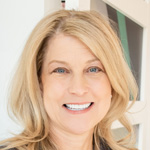
Presenter Information: Dr. Mackenzie "Mac" Kelley
 |
You can call her “Dr. Mac”! She loves creating strong relationships with her patients, has a great sense of humor and is very passionate about helping people feel comfortable while they are in her chair. Dr. Mac was born and raised in Fort Wayne, IN and attended Indiana University School of Dentistry, where she graduated with highest distinction. She was awarded the Omicron Kappa Upsilon Academic Achievement Scholarship and received the American College of Prosthodontists award, presented to students who demonstrate excellence in crowns, bridges, restorative and cosmetic procedures. So yeah, she’s smart AND cool! And she’s also super strong. Dr. Mac’s hobbies (obsessions) are Crossfit and Olympic weightlifting. She can squat twice her body weight and teach most guys in the gym how to clean & jerk. So you better floss when she tells you to! Following dental school, Dr. Mac completed her general practice residency at Carolinas Medical Center where she gained further exposure to complex dental procedures such as dental implants, surgical extractions, and difficult restorations. After residency, she practiced in Pittsburgh, PA for several years before moving with her husband to their dream home: the beautiful mountains of Colorado! Dr. Mac’s passion is cosmetic dentistry. She has taken hundreds of hours of continuing education in minimal prep veneers, crowns, cosmetic bonding, Invisalign, Botox and fillers. She prides herself in being able to give you the most natural enhancement of your smile and loves going through different treatment options with you. Whether that’s Invisalign and whitening, or 8 beautifully bright natural looking veneers – she’s your girl. She is currently working on receiving accreditation through the American Academy of Cosmetic Dentistry – this is a process that can take several years to complete but is a prestigious recognition that very few cosmetic dentists achieve in their lifetime. The Espire Riverfront location is also on the forefront of digital dentistry – they use a digital scanner and 3D printer to design a digital “mockup” of what your future smile will look like! How cool! When Dr. Mac is not working, she enjoys lifting weights at the gym, cooking, traveling and reading. She loves spending time with her family, friends, husband (who happens to be an oral surgeon!) and her cats. She encourages you to check out her cosmetic work (and dancing skills!) on Instagram. |
Viva Learning is an approved AGD PACE Provider and California State Dental Board Provider of dental continuing education. Viva Learning strives to deliver balanced, objective and clinically relevant information grounded on scientific research. Lecturers who are invited to deliver Viva CE webinars are advised to substantiate their claims with research-supported data and to disclose all commitments to, or relationships with, any commercial entity within the dental industry. In many cases, lecturers are sponsored by a dental manufacturing company, which provides them with support in the form of honorarium and/or dental products and equipment in order to help with clinical presentations. Prior to each live CE webinar, lecturers are made aware of the importance of delivering their presentations without commercial bias, and where appropriate, to mention a variety of different product choices that may be relevant to the subject matter of the lecture, for the educational benefit of the participant.
Transcript
I cure maybe 10 seconds just to get it hard enough. I will peel off my clear matrix and then I will
take a very sharp 12 blade, clean off the excess around the gingival area and the interproximal
area, and then I will have my assistant finish the cure.
Welcome to Austin, Texas, and welcome to the Dr. Phil Klein Dental Podcast. If the thought of hand
sculpting composite in the anterior social six makes you break into a cold sweat, you're not alone.
For many GPs, creating natural-looking aesthetic restorations in this highly visible area can be
one of the most technique-sensitive, and for some of us, stressful procedures in practice. But
what if there was a way to consistently produce beautiful, highly aesthetic results that make you
look like a composite artist? And you can do it in typically half the time it would normally take
you to do it freehand. In this episode, we're diving into the injection composite technique, a
digital workflow that's helping dentists create predictable, lifelike restorations without relying
solely on advanced freehand sculpting skills. Our guest is Dr.
Mackenzie Kelly. a cosmetic dentist, educator, and adjunct faculty member at Indiana University
School of Dentistry. She'll explain why this technique has become one of her go-to solutions for
anterior composite dentistry, the clinical steps that's involved, the materials she trusts for
outstanding aesthetic outcomes, and how to determine when the injection composite technique is the
right choice versus a traditional freehand approach. Best of all, Dr. Kelly walks us through the
entire process step-by-step, from planning the case and fabricating the matrix to delivering a
restoration that looks like it was created by an experienced composite artist. So if you've been
avoiding aesthetic anterior composite cases because you don't love hand sculpting, this episode
could completely change the way you practice direct restorative cosmetic dentistry. Before we get
started, I'd like to thank all of you for tuning in. If you're enjoying the show, please follow us
on Apple Podcasts and Spotify, and even better, leave a review. By doing so,
you're not only showing support for what we do here, but your reviews are instrumental in getting
more dental professionals to listen and benefit from our content. We really do appreciate it.
Dr. Kelly, it's a pleasure to have you on the show. Great to be here. I'm really excited. Thank you
for having me. Yeah, so you often describe composite as an artistic medium.
What is it about working with composite that you find so rewarding? And why do you think it offers
a kind of unique level of creativity compared to other cosmetic procedures? Well,
a lot of us dentists got into the field because we like working with our hands. And with composite,
you can... an immediate transformation so to speak you know i use other mediums to transform
people's smiles as well i use porcelain veneers but then you're relying on a lab to do what you're
envisioning in your head composite allows me to envision what i want to do and you know kind of use
my hands to create this amazing before and after procedure. I can actually use my brain,
get creative and do a transformation right there on the spot. Now, just curious. And I remember
dental school, it was a while ago, but I do remember dental school. And there were those
individuals, those students in dental school that were really talented. They could wax up from a
block. you know a beautiful tooth were you one of those students that artistically just had it you
caught me yes yeah so that was me i loved waxing i actually got paid by my school to do waxing for
actual patients so i have always loved waxing it's just been a natural talent for me yeah i mean
that's that's a great gift I went into endodontics, so you're probably thinking I probably wasn't
one of those people that were super artistic. But I got by, but I would never even dream of putting
my wax up next to yours. And I don't know you, and I haven't seen your wax ups, but that's my
guess. Sure. So talking about artistic ability, one of the biggest obstacles,
I think, for many GPs is confidence in their artistic sculpting ability. But in recent years,
one particular procedure is becoming more and more popular and really a viable option to freehand
sculpting and that's injection composite technique or what is sometimes referred to i've heard it
referred to as injection composite molding but i like injection composite technique better so
before i hand over the mic to you dr kelly with some questions i briefly want to give our audience
a quick overview of this procedure so injection composite technique uses a clear custom-made
template created from a diagnostic wax-up. And assuming in digital workflow,
that diagnostic wax-up can be designed and fabricated at the lab or directly in the office.
And from that, a template is made. And that template is used as a guide for the placement of
composite directly onto the tooth. So instead of sculpting the entire restoration by hand, which I
know you could do, the dentist injects the composite through small openings in the template.
allowing the material to flow into the exact shape that was planned in advance via the diagnostic
wax up and then of course once the composite is cured the templates removed and only minimal
finishing and polishing are typically needed now i know there's a lot of details in between there
as far as you know teflon tape and technique and we're going to ask you to go over that with us so
having given that Is that correct, by the way? Am I on target? That's perfect. You're on target.
Okay, good. For an endodontist, I'm happy. Sounds like you could do it. Yeah, yeah. Well, for the
few composites that I did do in my career, I wish I had this technique. So with your experience, if
a GP is wondering when to reach for the injection composite technique, what cases would you say are
ideal? And can we make our composite restorative cases not only more beautiful using this
technique, but also more efficient? with our chair side time i think you can use it in most
situations honestly there's not a situation that i can really think of where you would do it
freehand and you couldn't also use injection composite in that exact same scenario.
You know, it's always hard to mask a dark tooth, but that's going to be the same whether you do it
with injection composite or whether you do it freehand. Sometimes larger diastemas can be a little
tricky with injection composite. I find that doing a diagnostic wax up with every other tooth
really, really helps. toward the interproximal areas because I think that that's where some
dentists can run into trouble. But I use it anytime I am wanting to get very detailed specific
anatomy. I use it anytime I'm trying to add length or close diastomas.
And if a patient is wanting something very specific with regards to maybe a certain translucency or
characterization, you can always use your initial injection composite and then do a cutback
technique and layer in additional composite, but you still have your overall shape,
which I think is what most dentists feel the least confident with.
Now, let me ask you this. There needs to be some preparation for these. direct composites where
it's different than what we typically did in the past where the patient came in and you did maybe
some preparation on the tooth and then you went right in with your direct composite in hand.
crafted it so to speak but now you're using this clear template so tell us about the preparation
difference and treatment planning and how do you you know how do you plan that your team is ready
for this and when the patient sits down you're ready to go So I do my own digital wax ups. So I'm
lucky in that regard. I love digital technology. I use Exocad. I learned to do Exocad from taking
one of Diana Tadros's courses. I'm a huge fan of hers. That's where I learned my knowledge.
And so I will do my own wax ups and I will wax up the ideal design.
And then when I'm going to create a model, there are some different ways that you can go about
within the Exacad software where you can actually design a model. using every other tooth and then
you can print one with every single tooth and then when you're making your clear matrix you also
want to make two different clear matrices as well you want to make one with every other tooth and
that's going to really help you control the contours of the inner proximal areas and then you're
going to make a second clear matrix for the every tooth situation so it's really important i've you
know sometimes had a quicker on the spot injection composite case where I didn't have time to do
the every other tooth print. And there's a lot more cleanup to do afterwards, I will say.
So it does reward you in the end if you take that time planning the case well.
What about using Teflon tape and using just one template? So yes,
I even, you could, and I actually did a case this week doing it that way. I will Teflon every other
tooth. I will AeroBraid the exposed teeth in order to increase my bond strength.
I love AeroBrasion. And then I will complete every other tooth.
You never want to do multiple back-to-back teeth at once. It's just kind of a...
headache in terms of cleanup right so if you're using one template and you use teflon tape you do
every other tooth and then correct then you come back you clean all that up and then you teflon
tape the teeth that you just restored and then do the other remaining teeth correct and i found it
to be really helpful so this week i actually had that situation where i just printed one model and
had one clear matrix and I Teflon taped every other tooth and I did six through 11.
So six teeth, but I did, I don't know, six and then eight and then 10. And I made sure to finish
and polish all the way to completion because I find that if you're only going to use one model and
one clear matrix, if you finish and polish, you'll have. less cleanup,
like less composite will adhere to that really shiny polished composite tooth that you just did.
So if you're going to use one model, that's one shortcut. I would make sure to get it all the way
almost to darn near completion before you go in and do your second set of teeth.
Oh, that's an interesting tip. So from the digital workflow side, tell us how you use your digital
equipment from the time you scan the patient. to the time that you actually have two clear
templates in your hand. How does that whole process go? And then we'll get into the clinical chair
side stuff. So I will meet the patient. I'll get to know them a little bit better. My assistant
will take a great set of photos on them using a nice camera and we'll make sure to get a really,
really good full face photo. I think that's very, very important. You want to make sure that the
patient is in natural head position and they don't have their head tilted to any side. And then I
will have my assistant take a digital scan of them as well. And then I,
within the Exicad software, will merge those files and design what I think would look nice on the
patient. And then, of course, I will print that model. So that's kind of the...
on the back end, I typically won't meet the person and do a consult and do the same day treatment.
I do have some patients travel in to see me and I would always prefer they come in in the evening
and then I do the procedure the next morning, even if they're traveling from a distance, because I
just really think you got to spend the time planning out the case and printing the model. It just
makes such a difference. Now, when you print that model and you show it to them, is that used as a
sales? tool for them to be educated and say hey this is what we think your teeth can look like and
we're talking about the social six or the social four and we're talking about veneers primarily
Absolutely. I think that it is the best way to get case acceptance. I like doing mock-ups on
everything, even if I'm doing little composite edge bonding or if I'm doing a full mouth of
porcelain veneers. I think it's really, really important. And I will know, I know we're going to
jump to the clinical aspect before I do any type of injection composite.
I think it's very, very important to try the mock-up in their face. You don't want to spend all
the time. the teeth and doing Teflon and isolating and only to find out that when you're done with
your finished product, they're not really the length that you want them to be. So I think it's also
worth it to make a clear matrix, but also make some sort of putty matrix and do a traditional mock
-up. Yeah, provisional mock-up. So what do you use something like Luxotemp or something for that?
Correct. Yes. Now, do you get them to sign off on that when you make that provisional using a putty
matrix? So you have the clear template to inject into for the final. But before that,
you're showing them the model. They're kind of sold. Even if they accept the model, the digital wax
up from the model that you printed, you still go to a provisional? So yeah, I will use that to
guide because maybe I want to know for myself, it's a selling point, but I want to know whether or
not it looks good. In the patient's mouth. In the patient's mouth. Yeah, it looked good in my
digital software, but maybe the head was tilted a little bit when we took the picture. So I want to
check before I ever get them numb, before I put a handpiece or any etch to their mouth. I want to
make sure it actually looks good in their mouth because at that point still. it's reversible. And I
think it's really important too, if you have teeth that aren't in the correct position or you have
a tooth that's darker, if you use some sort of provisional bisacryl material first,
you can see if the tooth is showing through and that helps guide me what type of a composite am I
going to need to use for this case in order to mask that. Yeah. So let me ask you this. What would
you say to a dentist that said, hey, you're doing a digital wax up. You're showing the case to the
patient and they're getting sold on it. Now you're making a provisional using a putty matrix,
but you're also doing a direct injection with the template. Why not just do veneers using lithium
disilicate other than cost? Well, sometimes the teeth are not in the right position and you still
have to have some sort of path of draw. The beauty of composite is it could be 0.1 millimeters in
one spot and a full millimeter of thickness in the other spot. And so the beauty of composite is
that you have varying degrees of thickness and you can still get a beautiful product. Tons of
patients come in now wanting totally prepless veneers or minimal prep veneers.
And the reality is, unless they have small teeth, not all of them are candidates for totally
prepless cases or minimal prep cases. Even if they do some sort of ortho,
you know, you have to prep them a little bit. And so I just like the flexibility and the
versatility of using composite in a lot of these cases because you don't have to worry about path
of draw issues. What about longevity? though if i said there's no composite that's going to last as
long as lithium disilicate now are you using a material a composite that you have enough confidence
in that you feel you can go years with it yeah so i've heard that time and time again and so I
really, really like the VOCO Grandioso For You products or the Grandioso Flow because they have
such a higher filler content. That's what makes me a lot more confident with the product because I
know the higher the filler content, there is a higher strength. And if there's a higher filler
content, then there's less resin. And the resin components of the composite are the part that we
don't necessarily want. That's what picks. up stain and that's what has a shrinkage. So I know that
if I use a higher filler content, I feel a lot more confident that the longevity is going to be
very, very good. I think that the porcelain veneer is always going to be gold standard, but I feel
very confident that my composite restorations are going to last a long time because I use good
quality materials. So you're fabricating these veneers without a lab. essentially. You're using
composite. You still have some steps though. So until you get really comfortable with this method,
it does take some chair side time. Do you feel like you're charging the patient commensurately
based on your chair side time, even though you don't have the lab fees? In my opinion, yes. I
charge half my fee. So I have a certain fee for my porcelain and I have half that fee for composite
restorations. You don't necessarily have any lab fees because you're an Exocad genius,
which a lot of dentists are not. I mean, Exocad has an unbelievable number of features.
But generally speaking, most dentists want to send the design work out to the lab to do,
and they don't want to get involved with it, especially with software like Exocad, which is fairly
complex and comprehensive. Sure. And I feel like it's really one of those things that you have to
force yourself to practice. I've heard of dentists buying the equipment and then not using it,
which is just a huge waste. I don't know, a missed opportunity because I use it every single day.
It honestly, I know I'm a younger dentist, but it brought joy back to dentistry for me because at
my heart, I'm an artist. I love creating. And so it allowed me to start creating again.
Have you used analog techniques before you jumped into digital in your practice?
Not in dental school, but in practice. I had. I didn't own an actual wax kit,
but what I would do is I would take an alginate, I would pour up a model, and then I would wax,
but just with flowable composite. And then I would trim it away and do something like that.
And then I can still make some sort of clear matrix with that or like a lingual shelf or something.
So you have the versatility of being analog and digital, and plus you have the artistic ability. So
the sky's the limit with you, Dr. Kelly. There's no question about it. So getting back to the
actual injection composite technique, tell us about the materials, the matrix, and then go into the
clinical steps. So typically I will use some sort of...
clear PVS type material. And I will tell you right away, my strong suit is my artistic ability.
And I will admit, I am not a genius when it comes to dental materials. I know what works in my
hands. But if I'm misspeaking, I apologize. Generally, I'm genuinely trying my best.
So I'll use some sort of clear matrix material because it's flexible. I personally like Kettenbach
Future Clear. I think it's a great material.
I am going to admit, I don't always put it in a pressure pot. A lot of dentists do. I think it
makes the material more clear. And if I have time, I will certainly do that.
But the material works great, even if you don't pressurize it. And then I have found a really
helpful tip is when you're creating your small little points into get your composite,
I will take a... resin tip and I will go into my lab and sharpen it so that I can pierce it really
sharply. And it won't have all the little tissue tags running through the clear matrix. I didn't
used to know that tip and I would go in there with a burr and it would just create almost like this
shrapnel within the clear matrix. And then you had a really difficult time trying to guide your
resin tip back through. So I will spend the time and pier and make my tips really pointy.
And so I'll create little channels. And if it is a larger tooth surface, I actually use this quite
a bit in the posterior as well to build up someone's occlusion. So I won't go there right now. But
if it's a larger occlusal surface, I'll actually put two different ports in so that I can...
So just so it's clear to our audience that may not have ever done this procedure, you're talking
about the ports that allow you to inject the material into the actual...
clear matrix once it's seated right once it's fully seated so correct once you have that clear
matrix before you i guess you try it in first to make sure that it fits how do you prepare the
tooth the actual tooth and talk about the tooth is it all enamel is that what we're working with
basically yes so i'm doing these procedures pretty much all enamel. I am a lot more confident with
my enamel bonds. And then we talked about durability. I know that enamel bonds is one of the
strongest bond bond strengths there is. So I feel a lot more confident with the strength and
longevity of the restoration. If I can get it a hundred percent within enamel. So I'm not preparing
the tooth surface with any sort of hand piece, but I am doing a form of like micro preparation with
an air abrasion unit.
I use the KAVO unit. It's wonderful. And then I will isolate every other tooth with Teflon tape.
And then I will spend time using a phosphoric etch on the tooth surface.
I'll let it sit because it's unprepped enamel. So I'll let it sit for about 30 to 60 seconds.
I'll rinse and dry, make sure that my assistant doesn't suck up my Teflon tape. hit or miss with
that sometimes. And then I will apply my adhesive. What kind of adhesive?
I love VOCO Futura Bond because it is self-etched.
So I know maybe there's an area of dentin that could be exposed. I know it's going to etch the
dentin surface really well if there is a small little area of dentin exposure. Yeah, these
universal bonding agents are really good because they work with selective etch. They work with
total etch. Yep. So when you don't reduce the teeth how often do you get over contouring because
the thickness of the composite has to be you know something it can't be so thin that when they bite
on something it just chips off do you find sometimes that you have an over contour tooth where you
have to kind of take it back and then you're risking having too thin of a layer of composite sure i
think it's really important to squeeze your clear matrix really well i didn't used to do that i
didn't realize how important that was i would kind of just put my resin within the port and just
squeeze and it would go everywhere, all over the gingival surface, all over the adjacent tooth. My
Teflon is blocking that adjacent tooth, of course, but still it would create a lot of cleanup. Now,
before I cure, I squeeze the adjacent teeth areas pretty well.
And then my assistant will use a curing light. Another thing I do is I don't cure all the way.
to like 20 seconds right off the bat. I cure maybe 10 seconds just to get it hard enough.
I will peel off my clear matrix and then I will take a very sharp 12 blade clean off the excess
around the gingival area and the interproximal area and then I will have my assistant finish the
cure you have to be careful with doing this because if you're not using a really sharp 12 blade you
could accidentally take away a huge chunk of composite and then you're kind of left with free
handing to replace that missing area so I find if you squeeze the clear matrix pretty well,
it kind of minimizes that excess and you don't have extra like overly contoured composite
everywhere. So regarding case selection, you know, this is an aesthetic procedure, no question.
Sure. And you're probably treating a lot of patients that have wear facets, that have discolored
teeth. These patients may be older and they have the typical chipped teeth, heavily worn,
yellowed. When you do this procedure and then they look in the mirror after you're done, they must
be like wowed to death. I mean, it must be just such an exciting thing for them to see their teeth
come alive like that. They love it. They love it. It's such a cool experience seeing it when
they're just standing up in the mirror and looking and they just can't believe that that was
possible. So it's a really, really cool moment. And what's the chairside time we're talking about
for like the social six, let's say? It takes me about still about three hours to do two and a half
hours. Um, it depends if I'm going to have to do any sort of cutback technique. It depends if their
gingiva is healthy. I mean, if they have healthy gingiva and you're sitting there and flossing and
it doesn't stimulate bleeding, that is half the battle because when you're cleaning out all that
Teflon tape in between the tooth and you're having to floss a lot to get it out, then if there are
any type of unhealthy, I mean, you're just asking yourself for, a not fun experience in terms of
finishing. Do you use a hemostatic agent prior to all of this? I do.
I use like a clear hemodent type situation. Okay. Or a paste maybe? Yes.
Like a retraction paste. Yeah. Or I'll use a retraction cord that is not soaked.
I'll just push it back and use pressure as a way of hemostasis. So what about isolation?
So I really like the Opturgate. I think it's a great product. That's by Ivoclar. Yes. Very good
product. Wonderful. That's my favorite. I love that. It's a wonderful way. I find I use rubber dam
isolation for other composite techniques because I don't just do injection composite. I do other
composite techniques as well. But for this, I just find that you... the rubber dam gets in the way
it's like i don't care what you say it gets in my way anyway it's interesting because you know as
an endodontist of course and i've said this to the audience many times you know we have to use a
rubber dam and we want to because it's it's easier and endodontics is you know endodontics you you
go through the occlusal you don't have to really do a lot in approximately um and you certainly
don't want anything to fall down the patient's throat but the more i talk to restorative dentists.
And some of these people that I talked to were department chairmen at dental schools of restorative
dentistry for 20 years. And they use things like, you know, Opturgate and they use Dry Shield or
they use different things. But, you know, half of them or less than half use rubber dam. They just,
I think it really depends on what you're comfortable with and how good you are at putting a rubber
dam on. There's a skill to it. I've finished a case before where I've dammed everything.
And then I, not doing injection composite, just doing more freehand,
like a composite veneer. And I've finished and I don't really like the length. And that hurts when
you have spent so much time layering all this composite and then you don't really like the way that
it looks. Of course, like I tried to plan my best and do a mock-up beforehand to make confirm
length and confirm aesthetics.
feel like so you're saying the rubber dam took away your visibility yes aesthetic visibility of the
whole picture Yeah, I lost my perception of where things should go in relation to the lip.
And that's everything for me. So sometimes I finish with my rubber dam cases and I'm like,
oh, I'm going to adjust that length a little bit. Whereas if I'm just using the OptraGate, then I
can take it in and out and I can keep checking while the patient's smiling. And I really like
working on patients when they're not numb. And I find that sometimes with some of the rubber dam
clamps, they're a little uncomfortable. So it seems to me, Dr. Kelly, that if a dentist is in the
digital workflow and they have a scanner, which I think every dentist should by now, they have a
printer, which they don't necessarily need for this, but they should have it. There's a huge
savings of time over freehand sculpting of composites. It's a great alternative to fabricating lab
indirect restorations through lithium disilicate. I mean, you're going to save the patient money.
But you're also going to get like immediate gratification from the patient based on how fast you
can deliver these. It's a win-win for the patient and the practice. I don't really see any
downside to this. Gosh, it's so nice. And now all of a sudden you can do composite work and you can
do it a lot faster and more efficiently and more predictably. And that's the huge... a selling
point for composite for me, especially injection composite, because you can do beautiful work in
half the time. And I think that there's always going to be a time and place for layered technique
and doing it that way as well. But a lot of dentists don't want to spend the time doing it.
They say, oh, I can do another quadrant of dentistry in half the time and make more money. And we
all want to help people, but there's a business to dentistry. And I get that. So this allows us to
be a lot more and still get a really amazing product. Yeah, and using the right composite,
I know you like VOCO's Grandioso for you. And that 91% filler content is really revolutionary.
I mean, because- It is. Yeah, no other composite has ever had that kind of capacity to put that
much glass in there and other filler particles and also have the handling characteristics that it
has. As soon as someone hears 91%, they're thinking this thing is as stiff as a board. I'm not
gonna be able to work with it. so the grandioso for you has like the the extremely high filler
content it's just made with the packable right now. But the Grandioso flow also has an extremely
high filler content, 81%. Whereas all other flowables right now are like in the 60s and 70s.
Yeah. So I just feel really confident, even though I'm using a flowable, which quote unquote,
you would think is not that strong. I feel confident using it in this situation. And I think it's
going to give a really great long-term solution for the patient. percent flowables is still
outrageous. So as we wrap up this one, after listening to this episode, if every dentist remembered
just one thing about injection composite and direct aesthetic dentistry, what would you hope that
takeaway would be? I hope that they spend the time planning and preparing on the front end because
I truly think that can make or break the first experience. If you have a bad experience the first
time, you're not going to want to do it again. Give yourself enough time so that you have ample
time to sit there and isolate appropriately with Teflon tape. Make sure you have two different
models printed out. Even if you're using a lab and they're designing your case, it's worth it to
spend the extra money and print out two different model variations because it will make your life
so much easier on the back end. And then once you prepare and you've planned well, it's really just
fun because then you inject and then you peel off your clear matrix and you have this beautiful
result. It's almost, you're going to do it for the first time and be amazed at how good it actually
works. It's really fun. You think you're as excited as the patient is when they see it every time.
Oh yeah. I mean, I'm so excited. I'm going up, I'm hogging the mirror with them. I want to see. So,
you know, your enthusiasm is certainly contagious. I think it's amazing that you're a young
dentist. You're in a field that you really love. You found a way to do something that makes
patients incredibly happy. And it's not all about the money. The satisfaction you're getting from
practicing dentistry is worth far more than any dollar amount you could put on it. Thank you so
much, Dr. Kelly, for all this great clinical information. You packed a 30-minute episode with a
lot of clinical pearls. And I wish you the best of luck with your continuation of your practice.
And we hope to have you on the show again soon. Thank you so much. I really, really enjoyed it.
This was a lot of fun.
 Episode 807. Master the Social 6 with Injection Composite
9/28/2026 - CE Credits: 0.5 CEU (Take Exam)
Episode 803. Universal Composites with Dr. Marc Geissberger: What Dentists Need to Know
9/14/2026 - CE Credits: 0.5 CEU (Take Exam)
Episode 770. Mastering Pulp Therapy and Perforations with Modern MTA
5/18/2026 - CE Credits: 0.5 CEU (Take Exam)
Episode 766. Behind the Mask: Mental Health Struggles of Dentists and Their Teams
5/4/2026 - CE Credits: 0.5 CEU (Take Exam)
Episode 764. The End of the Composite Drawer: One Material for Every Case?
4/27/2026 - CE Credits: 0.5 CEU (Take Exam)